
Criminal Cases in the Concordia Parish Courts
The Louisiana judicial-district maps place Concordia and Catahoula Parishes in the Seventh Judicial District. The district court hears felony prosecutions and state-law criminal matters. The Concordia Parish Clerk of Court keeps the Concordia side of those files at the courthouse in Vidalia. City and mayor courts retain matters within their lawful local and traffic jurisdiction, which means one district-court search may not reveal a city citation or municipal bench warrant.
Court records answer a different question from arrest records. A jail booking preserves the allegations at intake. A Concordia Parish criminal case file shows what the prosecutor filed, what the judge ruled, and the final result. Searchers should use the docket number when known and should never treat a similar name as proof that two records concern the same person.
Concordia Parish Shares the Seventh JDC
The two-parish district is important when reading captions and contacting officials. A filing headed “Seventh Judicial District Court” is not enough by itself to establish that it belongs to Concordia Parish. Check the parish, docket number, division, filing date, and case caption. The Seventh Judicial District Attorney prosecutes state cases, while the clerk remains the custodian of pleadings, minute entries, orders, and judgments.
The Concordia Parish offices are close but distinct. The clerk is in Suite 5, the sheriff’s courthouse office is in Room 7, and the district attorney is in Room 9 at 4001 Carter Street. A request at one counter does not search the other two systems. Ask the clerk for judicial records, the sheriff for sheriff-created reports, and the prosecutor about prosecution-office information that is available.
The official judicial-district map shows the shared district.
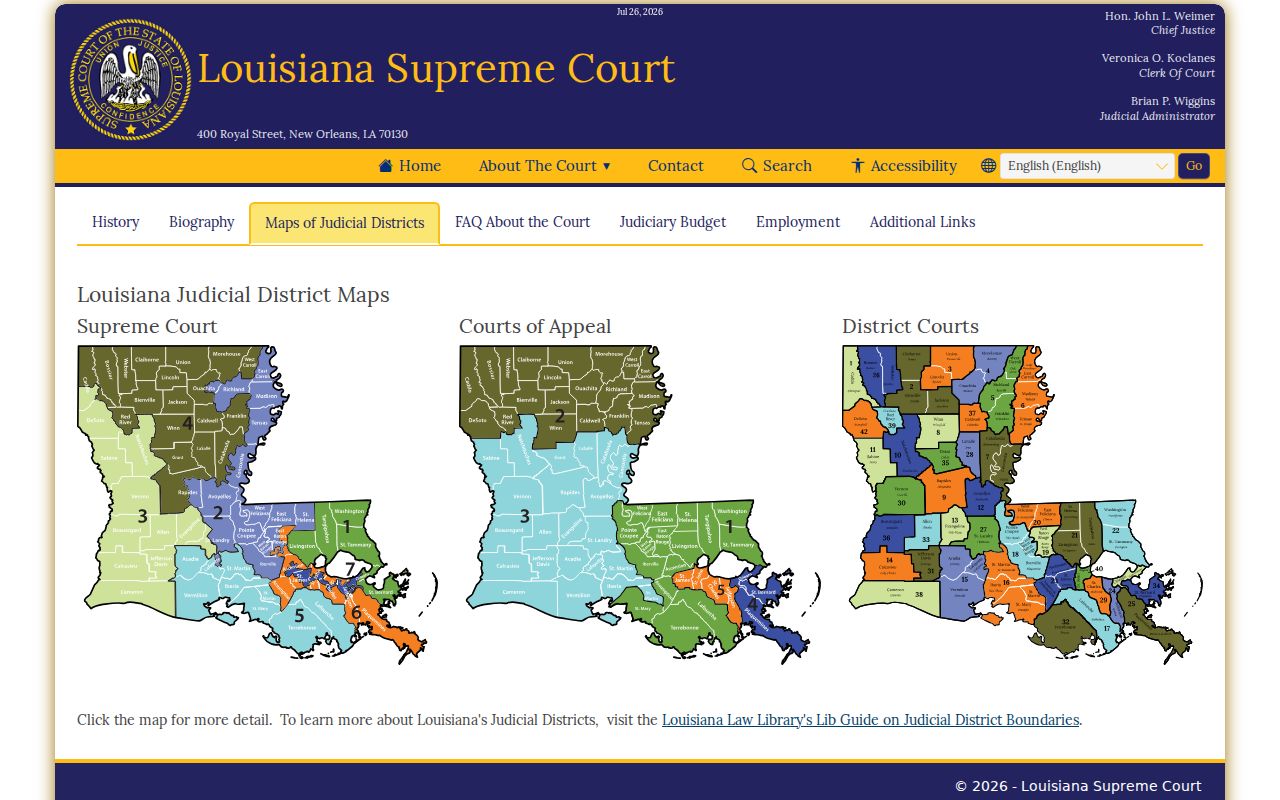
Use the parish label to distinguish a Concordia file from a Catahoula file.
The official district attorney page is shown in this research image.
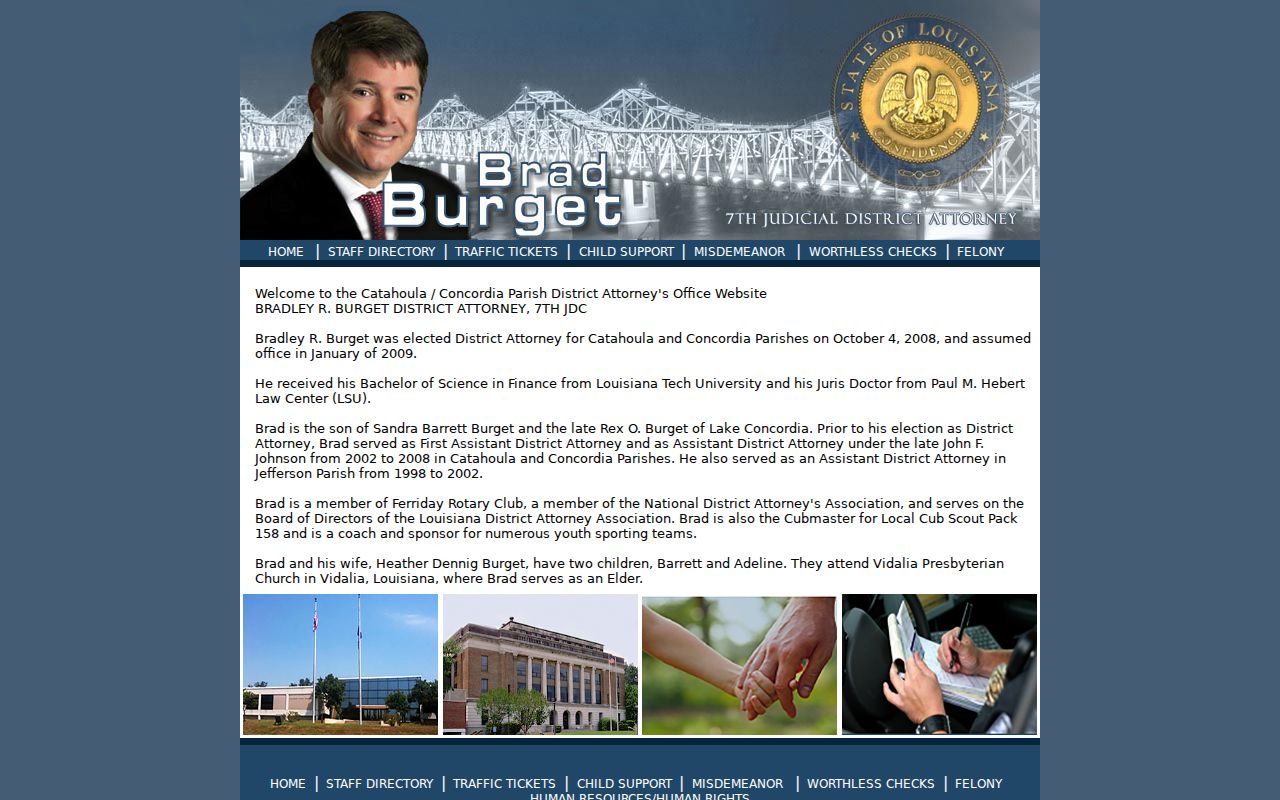
It helps identify the prosecuting district, but it does not replace the clerk’s court file.
How to Search Concordia Parish Case Records
No free unified Louisiana trial-court search or verified public Concordia Parish case portal was found. The dependable route is a focused clerk request. Have the person’s full name, an approximate filing or arrest period, the court, and a docket number if available. Give a date of birth privately only if the clerk accepts it and needs it to separate common names.
- Identify district, city, or mayor court from the citation, notice, agency, or case number.
- Ask that clerk to run a name or docket search for the relevant date range.
- Inspect the docket and minute entries before ordering selected pleadings.
- Request the charging instrument, final disposition, and sentencing order as needed.
- Ask for plain and certified-copy prices separately and ask about archived paper files.
| Search input | Use | Limit |
|---|---|---|
| Name | Starting point for clerk search | May match more than one person |
| Docket number | Points to one court file | Must match the correct court |
| Date range | Narrows paper and electronic review | No online coverage date was verified |
| Court or parish | Separates district and municipal files | Each custodian searches its own records |
Concordia Parish Court Records in Room 5
The official Concordia Parish Clerk directory lists 4001 Carter Street, Suite 5, Vidalia, LA 71373 and 318-336-4204. Mail may be sent to P.O. Box 790, Vidalia, LA 71373. Official sources did not publish a criminal-record fee schedule, counter hours, terminal policy, or digital coverage date, so call before travel and request a quote before asking for copies.
Concordia Parish Clerk of Court
4001 Carter Street, Suite 5
Vidalia, LA 71373
318-336-4204
Mail: P.O. Box 790, Vidalia, LA 71373
A narrow request saves work: ask for the docket or minute sheet, bill of information or indictment, final disposition, and sentencing order. If certification matters, say so at the start. The official directory page appears in the image below.
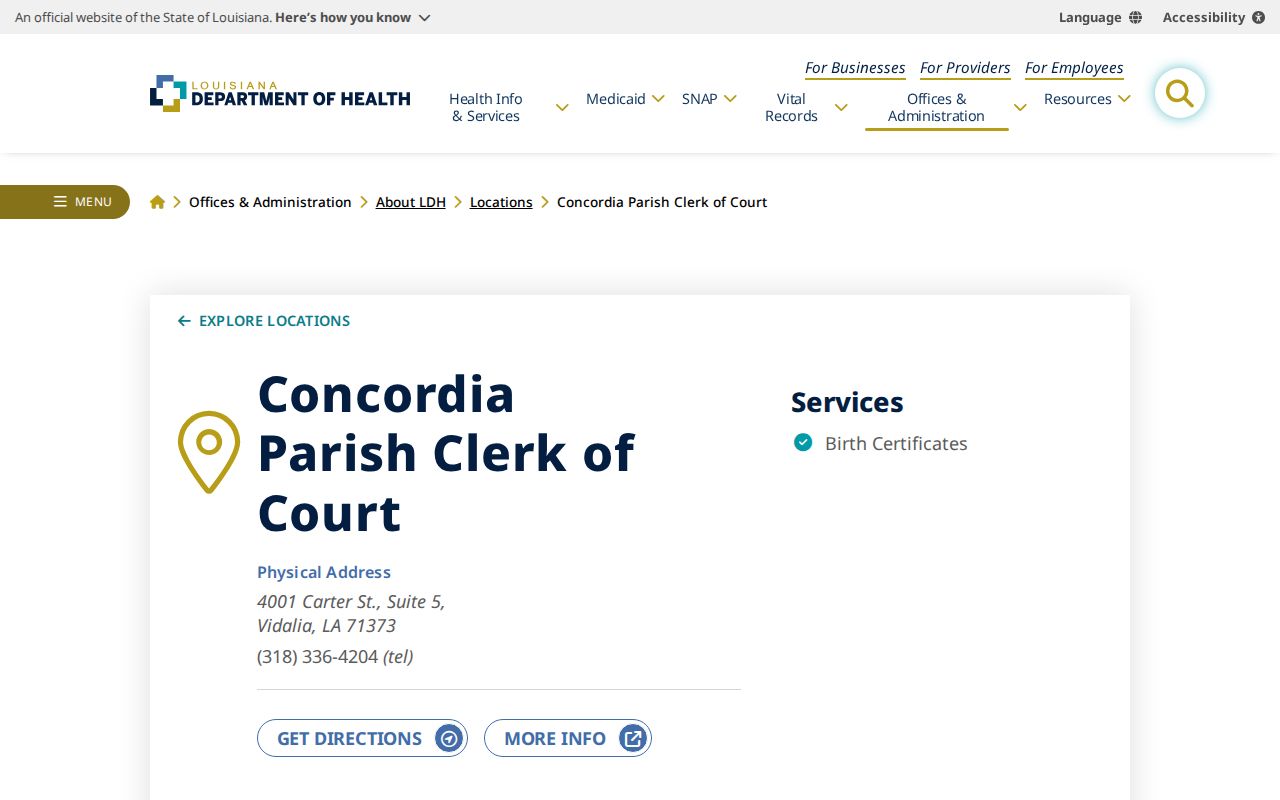
The page confirms the clerk contact, while current prices and access arrangements still require direct confirmation.
What the Concordia Parish Case File Shows
A criminal file is organized around the judicial case, not merely the arrest. The clerk’s documents may show the counts formally brought, counsel appearances, pleas, motions, rulings, bond orders, and outcome. Public content varies with the case and lawful restrictions.
| Case header | Court, parish, docket number, division or judge, filing date, and status. |
|---|---|
| Parties | State of Louisiana, defendant, counsel, and prosecutor. |
| Charges | Bill of information or indictment, statute, count, and treatment. |
| Events | Arraignment, motions, hearings, plea or trial, judgment, sentence, and appeal. |
| Custody and bond | Warrant or capias, bond, remand, and release orders when public. |
| Outcome | Dismissal, acquittal, guilty or no-contest plea, amendment, sentence, or probation. |
Financial entries can include public fines, costs, or restitution. An investigative narrative may remain with the arresting agency rather than the clerk. Note: A docket status is a pointer, while the signed judgment or certified disposition is the stronger proof of outcome.
Reading Concordia Parish Criminal Minutes
Minute entries form a short chronology of what happened in court. “Arraignment” records the first formal plea stage. A “motion” asks the court to rule on a legal or procedural issue. A “continuance” moves a setting but does not decide guilt. “Nolle prosequi” or a dismissal ends the listed prosecution unless law and later action permit otherwise. “Capias” often identifies a court command associated with appearance or custody.
- Disposition
- The recorded outcome of a count, such as dismissal, acquittal, plea, or verdict.
- Amended count
- A formal charge changed from the original booked or filed allegation.
- Certified copy
- A clerk-authenticated copy suitable when another official needs proof of the court result.
- Sentence
- The court-ordered consequence after a conviction, distinct from pretrial bond.
Read every count separately. One Concordia Parish case can contain different results for different charges, and a single status label may not describe the whole file.
Stages of a Concordia Parish Criminal Case
The basic Concordia Parish court sequence is: Charges Filed → Arraignment → Pretrial → Plea or Trial → Disposition → Sentencing. Not every case follows each stage in a neat line. Counts may be amended, hearings continued, warrants issued, or charges dismissed before trial. Appeals and later post-judgment motions can add more entries.
The district attorney decides what state charge proceeds; the court decides motions and adjudicates the filed case. The clerk records those events. That division explains why the jail’s original booking charge may differ from the bill of information and why neither the bond amount nor release status proves the final result. For a full arrest-to-court comparison, see the parish arrest history page.
Fix Concordia Parish History With a Disposition
Louisiana State Police warns that a disposition may be absent from a Louisiana Computerized Criminal History record. When a Concordia Parish dismissal or sentence is missing, obtain an original, unaltered certified disposition from the clerk. BCII expects identifying data that match, an arrest date within its stated one-day tolerance, the original booking charges, each amendment, a final outcome for every count, and sentence details.
This is why a screenshot or spoken summary may not solve the problem. Review your own record through Louisiana State Police Right to Review, then submit the certified court material through the correction process the agency directs. LACCH is closed to general anyone-on-anyone searches under R.S. 15:587. Concordia Parish court access does not turn the state repository into a public name-search portal.
Federal Cases From Concordia Parish
Federal criminal matters from Concordia Parish fall within the U.S. District Court for the Western District of Louisiana. PACER, rather than the Concordia Parish Clerk, supplies federal docket sheets and filed documents after registration and under the federal fee rules. A parish search cannot establish whether a federal case exists.
The federal court’s source page is preserved in this research image.
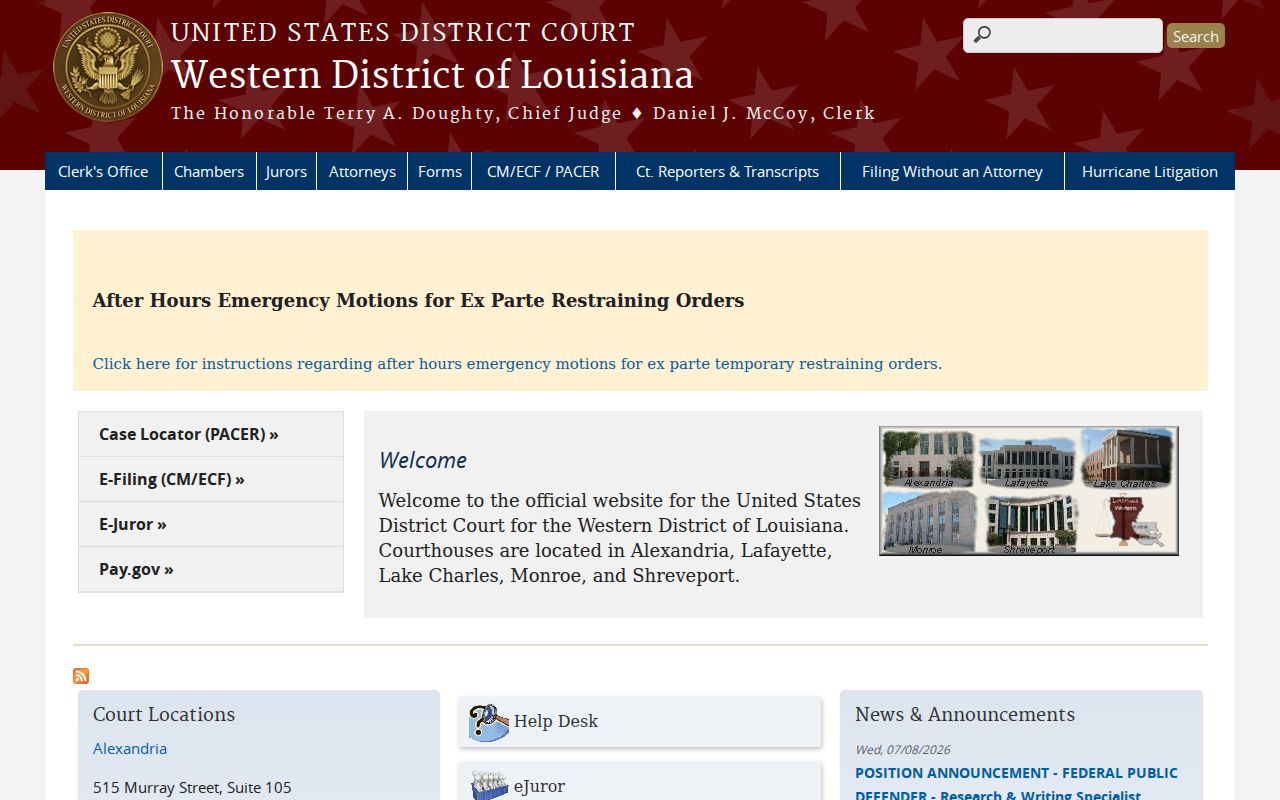
Federal prison location is a separate question for the Bureau of Prisons locator. An absent public docket also should not be treated as proof that no sealed federal matter or warrant exists.
Concordia Parish Case Access and Restrictions
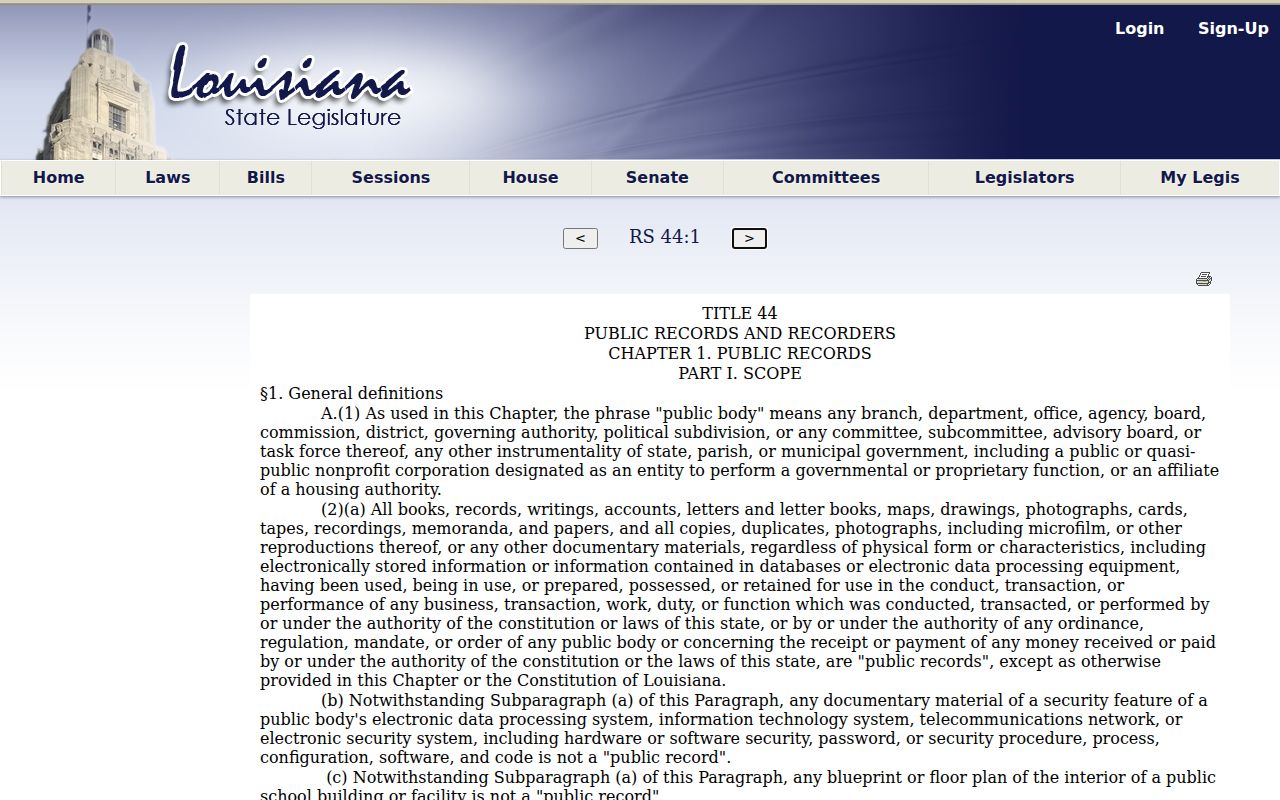
Louisiana R.S. 44:31 establishes access to public records unless another law supplies an exception. Concordia Parish court files can still contain sealed or expunged material, juvenile records, protected victim or minor identifiers, Social Security numbers, medical data, and security information that is withheld or redacted. Ask the custodian to identify the legal basis for a denial.
The public-record definition appears in the official source captured below.
The official right-of-access statute is also preserved below.
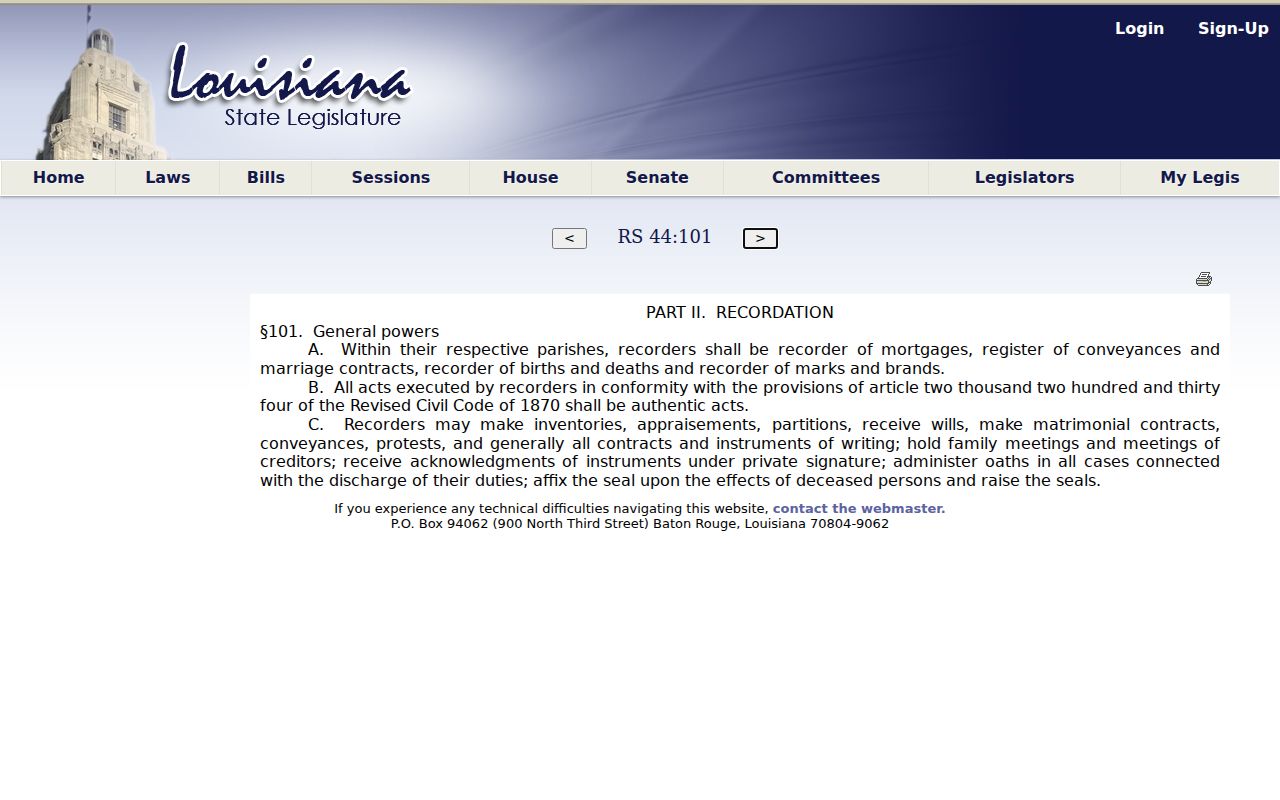
The broad access rule remains subject to specific exemptions and court orders. Expungement makes a qualifying record confidential rather than destroyed. Authorized agencies may retain access even when the public cannot inspect it. Copy fees, certification, and archive work should be confirmed with the clerk before ordering.